




How to Handicap a Horse Race: Reading Past Performances
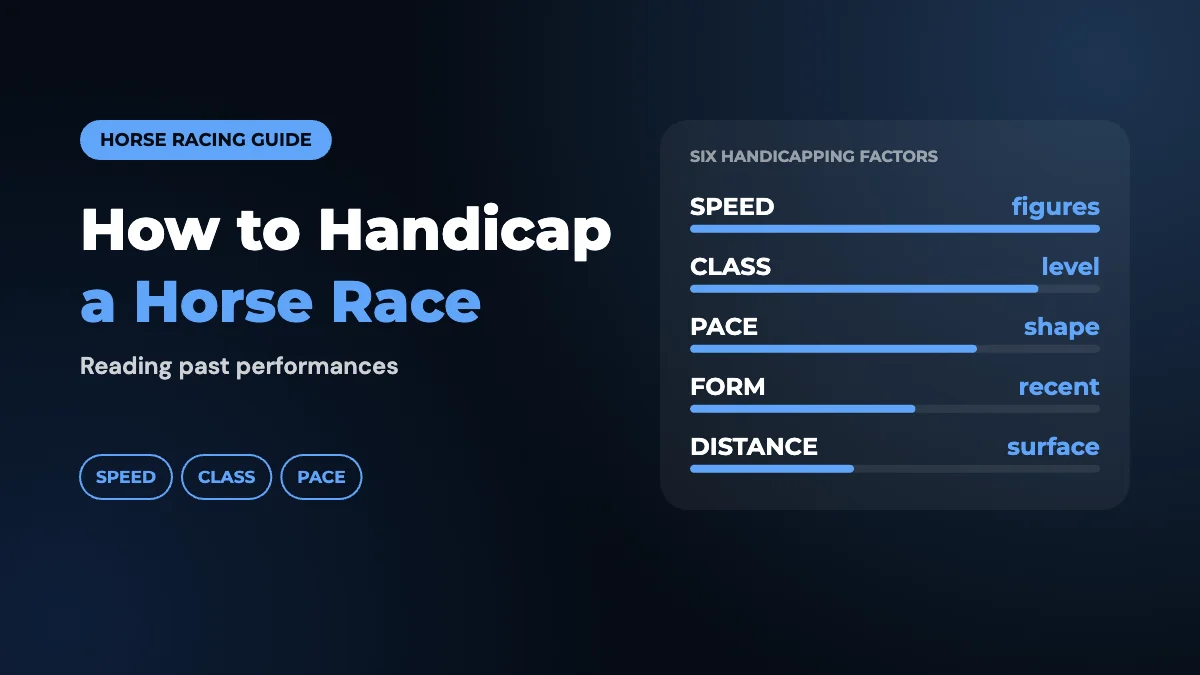
Handicapping a horse race means using each horse's past performances to judge its chance of winning today, then comparing that chance to the odds. The main factors are speed, class, pace, form, distance and surface, and the jockey and trainer.
How to read past performances
Past performances are a line-by-line record of a horse's recent races. Each line shows the date, track, distance, surface, class of race, where the horse was at each point of the race, the finish position and the margin.
Read the most recent lines first. Look for races at today's distance and surface. A horse that has never run this far, or never run on turf, is a guess no matter how good its other races look.
The six handicapping factors
- 1SpeedSpeed figures rate how fast a horse ran, adjusted for how fast the track was that day. Beyer Speed Figures, published in the Daily Racing Form, are the best known. Compare each horse's last few figures, not one big number.
- 2ClassClass is the level of competition. A horse dropping from allowance races into a claiming race is facing easier rivals. A horse stepping up has to run faster than it has before.
- 3PaceWork out who wants the lead. A lone front-runner can control the race. Several speed horses can tire each other out and set the race up for a closer.
- 4FormRecent races matter most. A horse improving in each start is more useful than one with a big race six months ago. Long layoffs are a question mark.
- 5Distance and surfaceSome horses are sprinters and some need more ground. Some run on dirt, turf or a wet track far better than others. Past results on today's conditions are the evidence.
- 6Jockey and trainerPrograms list win percentages for jockeys and trainers. A high-percentage trainer bringing a horse back from a layoff means more than a low-percentage one doing the same.
Other details worth a look
- Post position: inside posts can help in short races around a turn, and wide posts can cost ground.
- Workouts: recent timed training runs show a horse is fit, which matters most after a layoff.
- Equipment changes: blinkers added or removed are listed in the program.
- Scratches: a scratched speed horse can change the pace of the whole race.
Turn your opinion into a bet
Picking the most likely winner is half the job. The favorite wins more often than any other horse, but its odds are also the lowest. The bet is only good when the price is better than the horse's real chance.
Put a rough percentage on your top contenders, then check the board. If you make a horse a 25% chance, it is worth a bet at 4-1 or higher and a pass at 2-1. Our horse racing odds guide shows how to convert odds to percentages.
The same idea drives sports betting. We explain it in expected value in sports betting, and it is how we handicap the games on our free picks page.
Common beginner mistakes
- Betting every race. Passing a race you cannot read is a good decision.
- Chasing one fast race from long ago instead of recent form.
- Ignoring the surface or distance change.
- Playing large exotic tickets before you can pick winners.