




Why Do Betting Lines Move? Openers, Steam and Late Money
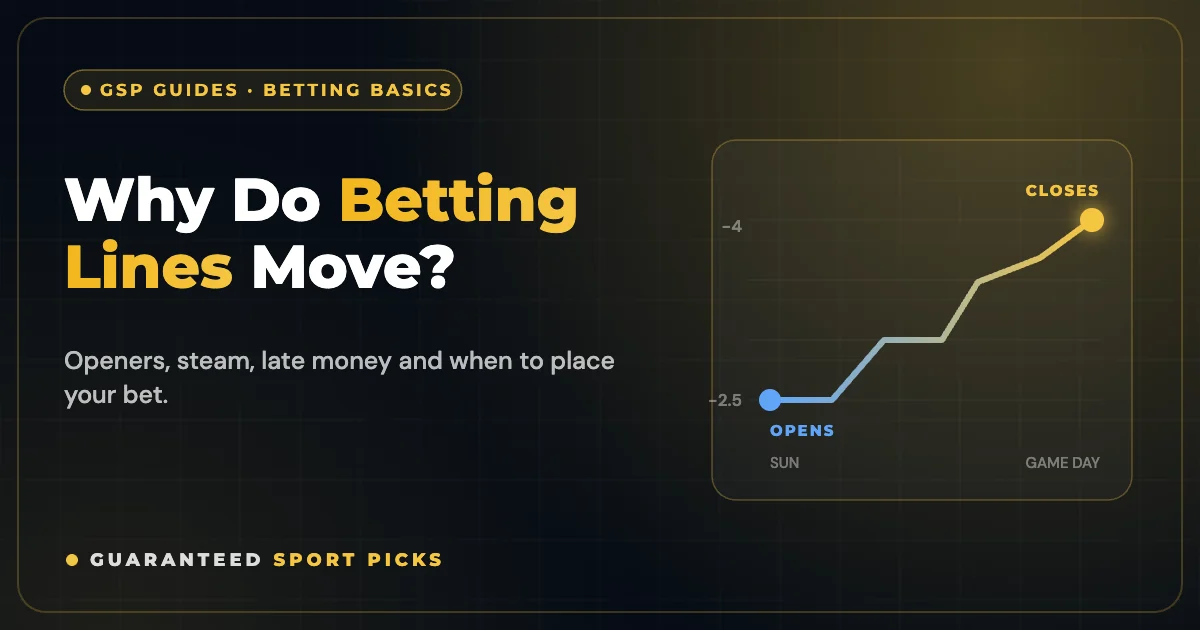
An NFL line opens on Sunday night, a few hours after the previous week ends. By the following Sunday it is often a completely different number. Nothing about the two teams changed on most of those days, and yet the number kept moving. Understanding what moves it is how you decide whether to bet now or wait.
Where the opening number comes from
An opener is not a prediction of the final score. It is a sportsbook's best estimate of the number that will attract balanced action, built from power ratings, injuries, rest and home field, then adjusted for what the book expects the public to do. Openers usually go up at low limits, deliberately, because the book wants to find out where it is wrong before it takes serious money.
That low-limit window is why early numbers move fastest. The first bets into a fresh line are mostly from people who do this for a living, and books move quickly in response. By Monday afternoon a line has usually absorbed those opinions and settles down for a few days.
Information moves, and money moves
The practical difference is that information moves tend to stick and money moves sometimes reverse. A line that jumps a full point on a quarterback ruling is not coming back. A line that drifts half a point because the public loves a prime-time favorite often drifts back the other way once the sharper side gets bet late.
What steam looks like
Steam is a sudden move on the same side at many books at once, within minutes. It usually means a group of respected bettors hit the same number simultaneously, or that a syndicate moved it deliberately. Steam is information in itself, but it is information you have already missed by the time you see it, because the good number is gone. Chasing a steam move means taking the worse price that the move created. Our guide to sharp money covers who is behind these moves.
Reverse line movement
Reverse line movement is when a line moves toward the side fewer people are betting. If 75% of the tickets are on the favorite and the favorite's number gets shorter rather than longer, that usually means a smaller number of larger, more respected bets landed on the underdog. It is one of the few publicly visible hints that money and opinion are pulling in opposite directions.
It is a hint, not a signal. Books also shade lines toward popular sides on purpose, knowing the public will bet them anyway, so a move that looks like reverse line movement can just be a book pricing in its own expectations.
So should you bet early or late?
| Situation | Lean | Why |
|---|---|---|
| You like a popular favorite | Early | Public money tends to push these numbers up as the week goes on. |
| You like an unpopular underdog | Late | The number often gets better as money lands on the other side. |
| You have an opinion on a total | Early | Totals move on weather and public lean, usually upward on marquee games. |
| Key injury news is pending | Late | Betting before a ruling is betting blind on the most important variable. |
| You just saw the line jump | Neither | You are taking the price the move created. Wait for the next number. |
How to judge whether you timed it well
There is one honest scorecard here, and it is not whether the bet won. It is whether you got a better number than the market settled on. If you took a team at -2.5 and it closed at -4, you bought that side for less than the market ended up valuing it, whatever the final score says. That is closing line value, and tracking it will tell you more about your timing than a month of results will.
Things line movement does not tell you
- It does not tell you who wins. A line that moves three points toward a team is the market's opinion, and the market loses plenty of games.
- A big move is not a green light. By the time you see it, the value that caused it has already been taken.
- Percentages of bets are not percentages of money. A side can have 80% of the tickets and a minority of the dollars.
- Not every move is meaningful. Books shade numbers, correct errors and manage their own exposure constantly.
Line movement questions
Why do betting lines move?
What is steam in betting?
What is reverse line movement?
Should I bet early or wait for the line to move?
Does a line moving mean that team will win?
Sports betting involves risk and is intended for entertainment purposes for adults 21 and older. Please bet responsibly. If you or someone you know has a gambling problem, call 1-800-GAMBLER.